Am I suitable for bariatric surgery?
Written by Dato' Dr Tikfu Gee, MBBS, MS (Surgery), Fellowship in MIS (France)
Bariatric surgery is considered for people whose weight is harming their health, based on body mass index (BMI) and conditions such as type 2 diabetes. For people of Asian descent the BMI thresholds are lower. A team assessment, not a number alone, decides whether surgery is suitable.
Key points
- International guidelines: surgery is recommended at BMI 35 or above, and can be considered at BMI 30 to 34.9 with a condition such as type 2 diabetes [1].
- For Asian populations, the guideline suggests offering surgery from BMI 27.5 [1].
- Reaching a threshold opens the conversation. It does not mean surgery is the right choice.
- You do not need to have “failed” at dieting first to deserve an assessment.
What BMI do I need for bariatric surgery?
| BMI | What the international guideline says [1] |
|---|---|
| 35 or above | Surgery is recommended, with or without other illnesses |
| 30 to 34.9 with type 2 diabetes or another metabolic illness | Surgery should be considered |
| 27.5 or above, for people of Asian descent | Surgery can be offered |
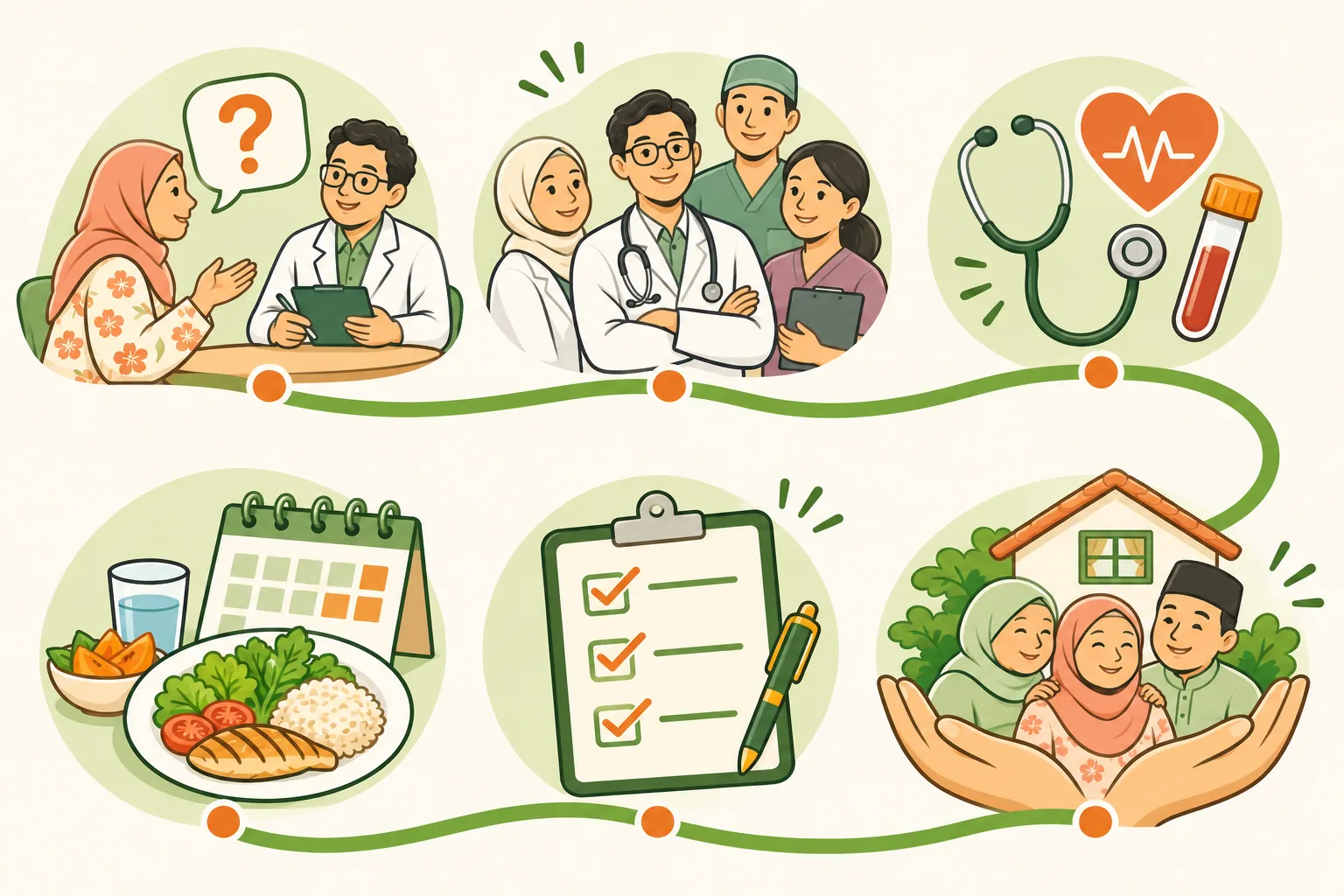
Who is on the team, and what do they check?
| Team member | What they do |
|---|---|
| Surgeon | Explains the operations, benefits and risks; examines you |
| Dietitian | Reviews how you eat; teaches the diet before and after surgery |
| Physician or endocrinologist | Checks diabetes, blood pressure, sleep apnoea and other conditions |
| Anaesthetist | Checks you are fit for a general anaesthetic |
| Psychologist or counsellor | Talks about eating habits, mood, expectations and support at home |
| Nurse | Coordinates your care and answers day-to-day questions |
Why is there a mental health check?
It is routine and it is there to help you. Low mood and binge eating are common in people seeking surgery: about 1 in 5 has depression and about 1 in 6 has binge eating disorder [3]. These do not automatically rule surgery out. Knowing about them lets the team support you.
When might surgery not be suitable, or be delayed?
- A serious illness that makes an anaesthetic unsafe
- Pregnancy, or planning a pregnancy in the next year
- Active alcohol or drug dependence
- An untreated eating disorder or severe untreated mental illness
- Not being able to commit to life-long vitamins and follow-up
A qualified doctor will go through this with you. Some of these can be treated first, and surgery reconsidered later.
What questions should I ask?
See the printable sheet “Questions to ask before deciding”.
Want more detail?
- The 2022 guideline from two international surgical societies replaced criteria dating from 1991. It states that BMI thresholds should be adjusted for Asian populations: a BMI above 25 suggests clinical obesity, and people with a BMI of 27.5 or above should be offered surgery [1].
- A review of 68 publications found depression in 19% and binge eating disorder in 17% of people seeking or having surgery. Neither was consistently linked to worse weight results, and surgery was linked to lower rates of depression afterwards [3].
- For what surgery can and cannot do for diabetes, blood pressure and other conditions, see bariatrikterbaik.com under “Related educational resources”.