What can I eat after bariatric surgery?
Written by Dato' Dr Tikfu Gee, MBBS, MS (Surgery), Fellowship in MIS (France)
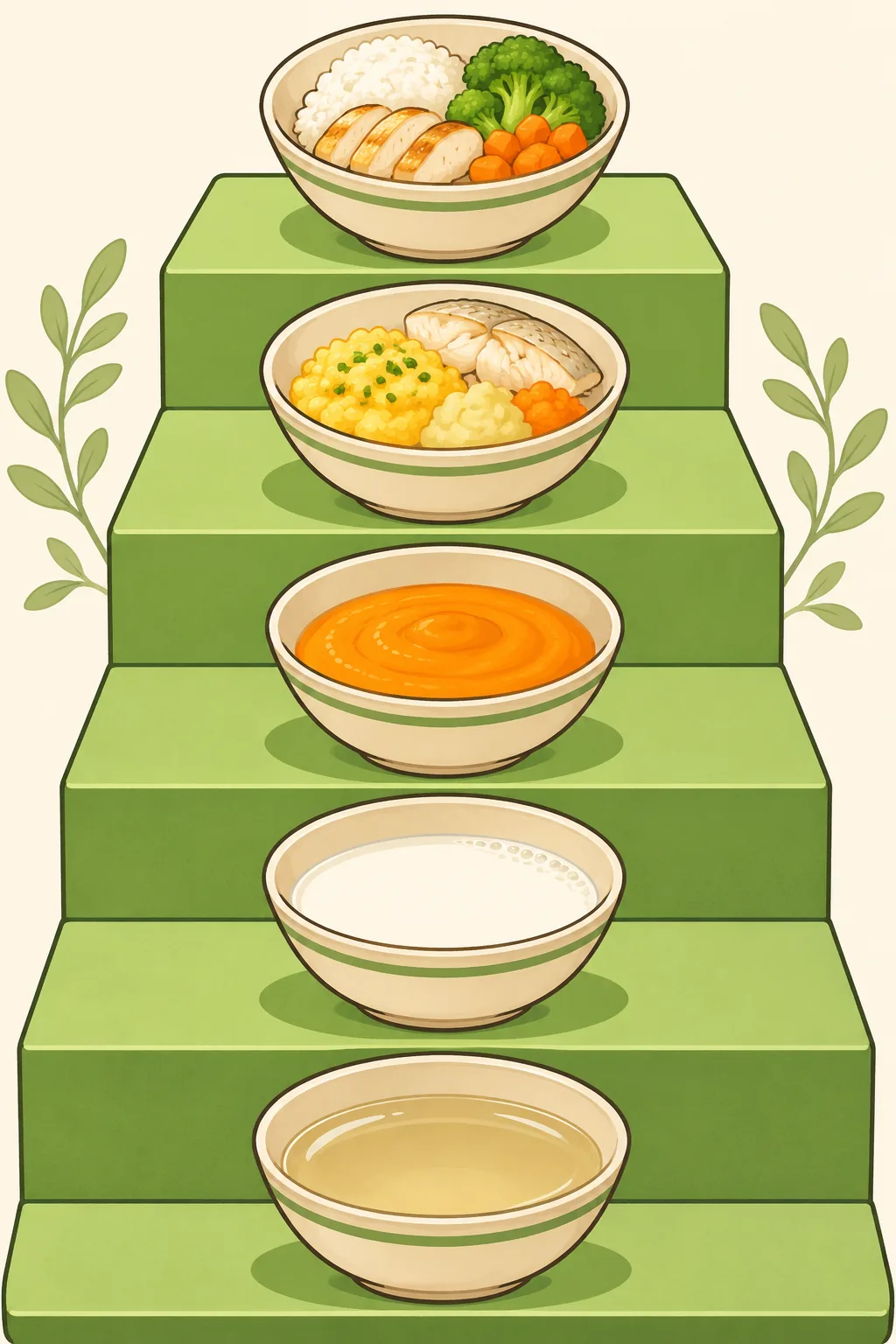
After bariatric surgery, food returns in stages: clear liquids, then full liquids, then purée, then soft food, then normal texture. Each stage lets the new stomach heal. Protein and fluids come first at every stage, and portions stay small for life.
Key points
- Move through the stages at the pace your dietitian sets. Do not skip ahead.
- Protein first, at every meal. Aim for at least 60 grams a day unless told otherwise [10,11].
- Sip fluids all day, between meals and not with them.
- Eat slowly, chew well, and stop at the first feeling of fullness.
- Avoid sugary drinks and fizzy drinks.
What are the diet stages after bariatric surgery?
Timings vary between teams. Your dietitian's plan comes first.
- Stage 1: Clear liquidsWater, clear soup, unsweetened tea
- Stage 2: Full liquidsMilk, soy milk, strained soup, protein drinks, thin yoghurt drink
- Stage 3: PuréeBlended chicken or fish with soup, mashed tofu, smooth porridge (bubur) with blended egg or fish, mashed dhal
- Stage 4: Soft foodSteamed fish, soft tofu, scrambled egg, minced chicken, soft-cooked vegetables, ripe papaya or banana
- Stage 5: Normal textureOrdinary home food in small portions, protein first
The whole ladder usually takes several weeks.
How much protein do I need, and why?
When weight falls quickly, the body loses muscle as well as fat. Protein protects muscle. In a review of studies, eating less than 60 grams a day was common after surgery and was linked to more muscle loss [11].
Roughly what 20 grams of protein looks like
Amounts vary by product and portion size. Check food labels where you can.
| Food | Rough guide |
|---|---|
| Chicken or fish, cooked | A piece about the size of your palm |
| Eggs | Three |
| Tempeh | A block about the size of your palm |
| Firm tofu | About two palm-sized blocks, because tofu holds more water |
| Milk or unsweetened soy milk | Two and a half glasses (250 ml each) |
| Protein drink | Check the label: the amount in one serving varies a lot |
How much should I drink?
- Sip all day. Many teams advise working up to about 1.5 to 2 litres a day.
- Wait about 30 minutes after a meal before drinking, so the small stomach has room for food.
- Dark urine, dizziness and a dry mouth mean you need more fluid.
What are the golden rules for eating?
The seven rules are also a printable fridge poster.
Which foods often cause trouble at first?
Dry meat, sticky rice, soft white bread, stringy vegetables and fried food can feel stuck or cause discomfort early on. Try new foods one at a time, in small amounts. Most people can eat a wide range of ordinary food in time.
What is dumping syndrome?
After some operations, mainly gastric bypass, sugary or fatty food can rush into the gut. This can cause cramps, a racing heart, sweating, dizziness or diarrhoea soon after eating, or shakiness from low blood sugar one to three hours later. Changing what and how you eat is the first treatment [12]. See the side effects page.
Want more detail?
- Clinical guidelines advise a minimum of 60 grams of protein a day after bariatric procedures, with more for some people [10].
- A 2025 review found that protein of at least 60 grams a day helped preserve muscle, especially in the first six months, although the studies varied in quality [11].
- An international expert panel agreed that dumping syndrome is caused by food passing too quickly into the small bowel, and that diet changes come first in treatment [12].