What happens on the day of bariatric surgery?
Written by Dato' Dr Tikfu Gee, MBBS, MS (Surgery), Fellowship in MIS (France)
Answer first
Bariatric surgery is done under general anaesthetic, almost always by keyhole surgery through a few small cuts. Most people are up and walking the same day, start sipping fluids soon after, and go home within a few days.
Key points
- You will be asleep for the whole operation.
- Walking early and sipping fluids are part of the treatment. They help prevent blood clots and chest infections.
- Pain is usually managed with tablets or liquids after the first day.
- Serious problems are uncommon. The risk of death is about 1 in 1,000 [8].
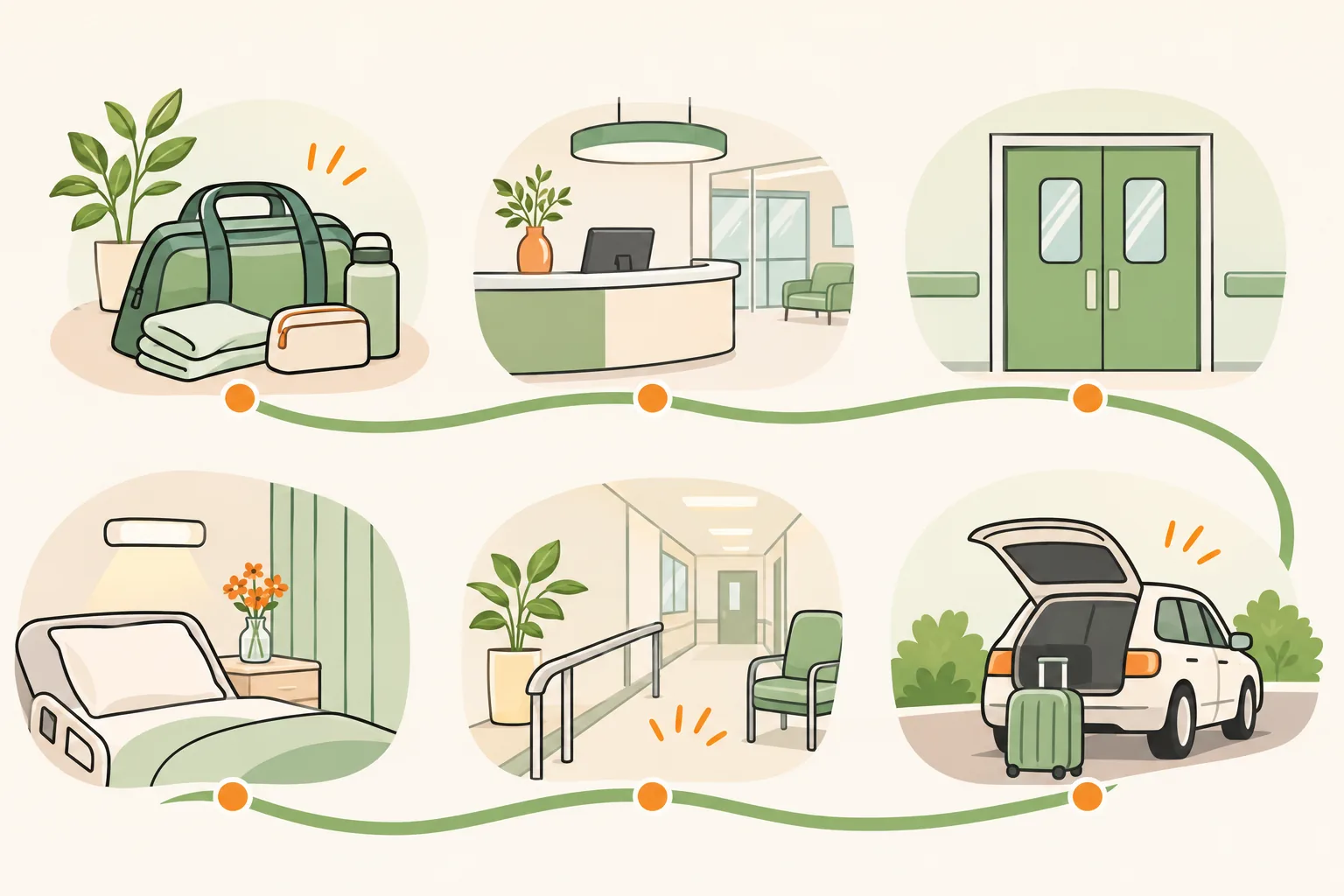
What happens, step by step?
- Before you come inNothing to eat for some hours before, as instructed. Bring your usual medicines and your breathing machine if you use one for sleep apnoea.
- ArrivalChecks by the nurse, surgeon and anaesthetist. Stockings or leg pumps to protect against blood clots.
- The operationGeneral anaesthetic. A few small cuts. A camera and fine instruments. How long it takes depends on the operation.
- Waking upIn the recovery area, then the ward. Pain and sickness medicines as needed.
- Same daySitting up, then walking with help. Small sips of water.
- Next day or twoMore fluids. Walking further. The team checks your pulse, temperature and pain.
- Going homeWhen you can drink enough, walk, and your pain is controlled.
Will it hurt?
Most people describe soreness around the small cuts and sometimes shoulder-tip pain from the gas used in keyhole surgery. Both settle over days. Tell the nurse if pain stops you from walking or breathing deeply.
What do I take home?
- A written diet plan for the first weeks
- Medicines: usually a stomach-acid medicine, and sometimes blood-thinning injections for a short time
- Your vitamin plan
- A date for your first check-up
- A number to call if you are worried, given to you by your treating team
Packing for hospital? Use the hospital bag tick-list.
How safe is bariatric surgery?
| Measure | What studies found |
|---|---|
| Risk of death around the operation | About 8 in 10,000, in a pooled analysis of published studies [8] |
| Overall complications in a large Malaysian series | 1.7% of 1,478 patients [9] |
These are averages. Your own risk depends on your health, and your surgeon will discuss it with you.
Want more detail?
- Recovery programmes used around the world include advice before admission, careful anaesthetic choices, early walking and early drinking [2].
- The warning signs to watch for after going home are on the “Side effects and warning signs” page.